
How Long Do Robot Lawn Mowers Last?
A robot lawn mower is not a small impulse purchase. It is a premium outdoor automation product, and for most homeowners, the real question is not just “does it work?”
The bigger question is:
How long will it last?
That is a smart question to ask before buying. A quality robotic lawn mower can save hours of mowing time every week, but the long-term value depends on build quality, battery life, maintenance, storage, terrain, mowing schedule, and whether the mower is correctly matched to the property.
In general, a well-built robot lawn mower can last for many years with proper care. However, not every part of the mower lasts the same amount of time. The body, motors, electronics, battery, blades, wheels, tracks, sensors, and charging system all age differently.
In this guide, TheRoboZone breaks down how long robot lawn mowers typically last, which parts wear out first, how to extend the life of your mower, and how to choose a model that gives you the best long-term value.

Quick Answer: How Long Do Robot Lawn Mowers Last?
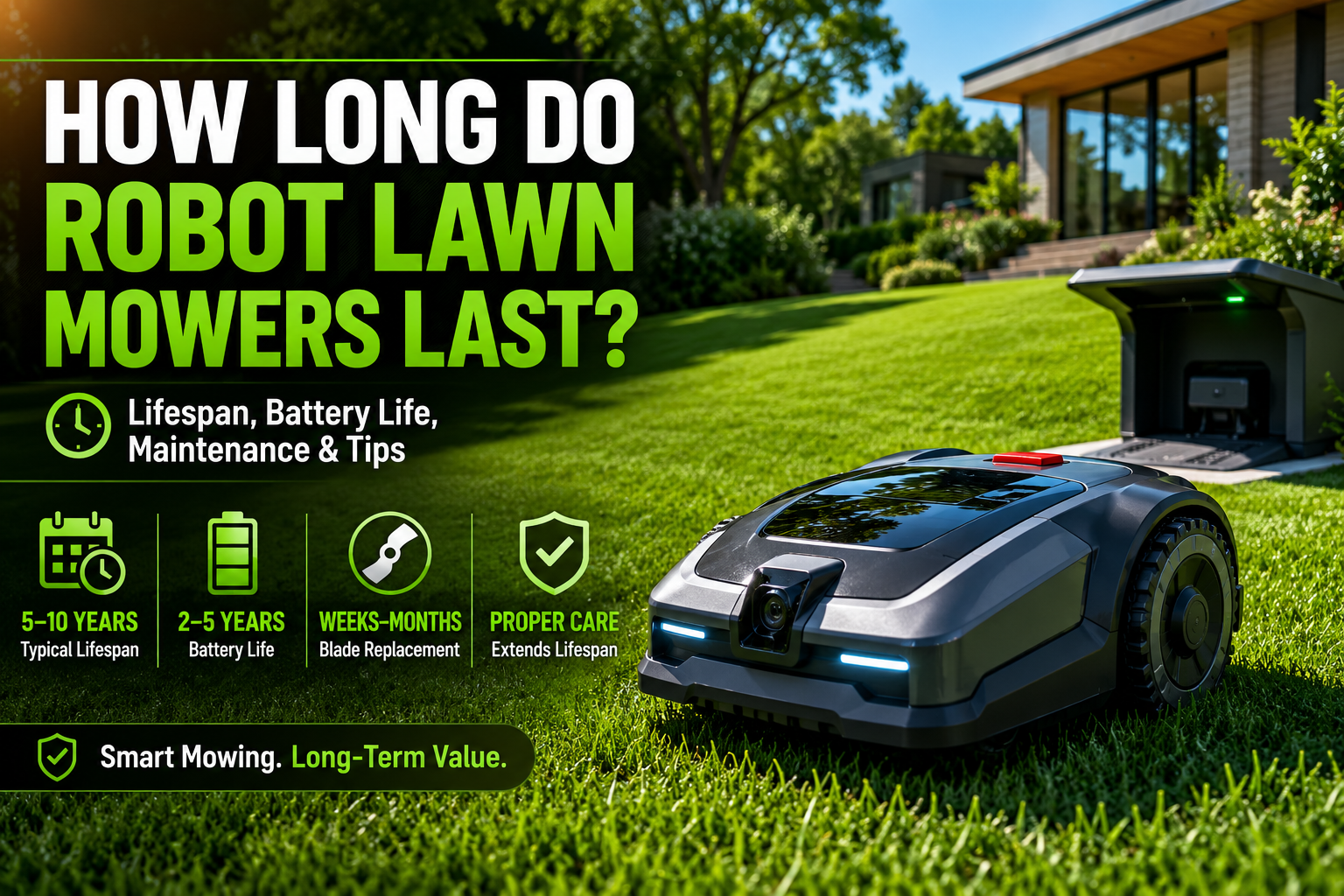
A quality robot lawn mower can often last around 5 to 10 years when properly maintained, stored correctly, and used within its intended lawn size and terrain limits.
The battery usually needs attention sooner. Many robotic mower batteries last around 2 to 5 years, depending on usage, charging cycles, lawn size, mowing frequency, climate, and storage habits.
Blades are the most frequent wear item. Depending on the mower, grass conditions, and blade type, they may need to be replaced every few weeks to every few months.
Here is the simple breakdown:
| Part | Typical Lifespan | What Affects It |
|---|---|---|
| Mower body and frame | Many years | Build quality, storage, terrain, impact, weather exposure |
| Battery | About 2 to 5 years | Charging cycles, lawn size, mowing frequency, temperature, storage |
| Blades | A few months | Grass type, mowing frequency, sticks, sand, rocks, dulling |
| Wheels, tracks, and tires | Several seasons | Slopes, rough ground, wet conditions, heavy use |
| Charging station | Many years | Weather exposure, placement, electrical protection, cleaning |
| Sensors and electronics | Many years | Moisture, impact, software support, storage, care |
What Determines How Long a Robot Lawn Mower Lasts?
Robot mower lifespan is not one fixed number. Two people can buy the same mower and have very different long-term results.
A mower used on a small, flat, clean lawn may age much more slowly than a mower running every day across steep slopes, thick grass, rough ground, tree roots, sticks, and wet areas.
The biggest factors are:
- How often the mower runs
- How large the mowing area is
- How difficult the terrain is
- How thick or fast-growing the grass is
- How well the battery is maintained
- How often the blades are replaced
- How the mower is stored during winter
- Whether the mower is cleaned regularly
- Whether the mower is properly sized for the property
This is why buying the right mower matters. A mower that is undersized for the yard will work harder, charge more often, and experience more wear over time.

How Long Does a Robot Lawn Mower Battery Last?
The battery is usually the first major component shoppers ask about.
Most robot lawn mowers use rechargeable lithium-ion or lithium-based battery systems. Over time, all rechargeable batteries lose capacity. That means the mower may not run as long per charge as it did when it was new.
For many robotic mowers, a battery life of roughly 2 to 5 years is a realistic expectation, depending on how heavily the mower is used.
A mower maintaining a small lawn a few times per week may put less stress on the battery than a mower maintaining a large yard every day during peak growing season.
Signs a Robot Mower Battery Is Aging
Your robot mower battery may be wearing down if:
- The mower returns to the charging station more often than normal
- The mower cannot complete the same area it used to complete
- Runtime becomes noticeably shorter
- The mower stops on the lawn with low battery
- Charging becomes inconsistent
- The mower needs more frequent charging cycles
Battery replacement is normal over the life of a robotic mower. It does not mean the entire mower is worn out. In many cases, replacing the battery can extend the useful life of the machine.

How Long Do Robot Lawn Mower Blades Last?
Blades are a regular maintenance item.
Robot mower blades are designed to make frequent, light cuts. Instead of cutting tall grass once per week like a traditional mower, a robot mower usually trims small amounts more often. This helps maintain a cleaner lawn appearance and turns fine clippings into natural mulch.
However, blades still wear down.
Grass, sand, sticks, pinecones, leaves, rocks, and general friction can dull or damage the blades. Dull blades can tear grass instead of cutting it cleanly, which may leave the lawn looking rough, brown, or uneven.
Signs the Blades Need Replacement
- The lawn looks frayed or torn after mowing
- Grass tips turn brown shortly after cutting
- The mower leaves uneven patches
- The mower seems to work harder than normal
- You see visible nicks, bends, or dull edges on the blades
- The cut quality is not as clean as it used to be
For the best results, inspect the blades regularly and replace them as needed. Blade life depends heavily on lawn conditions and mowing frequency.
Can a Robot Lawn Mower Last 10 Years?
Yes, a quality robot lawn mower can potentially last close to 10 years with proper care, especially if it is used correctly, maintained regularly, stored indoors during the off-season, and repaired when needed.
However, the mower will likely need replacement parts during that time.
Think of a robot mower like a premium outdoor appliance. The main unit may last many years, but parts such as blades, batteries, wheels, tires, tracks, seals, and accessories may need replacement along the way.
The better question is not only “can it last 10 years?”
The better question is:
Can the mower deliver reliable value over multiple seasons?
That depends on the product, the property, and how well the mower is cared for.
Do Robot Lawn Mowers Need a Lot of Maintenance?
Robot lawn mowers do need maintenance, but they usually require less hands-on labor than mowing a lawn manually every week.
The most important maintenance tasks are simple:
- Keep the mower clean
- Remove grass buildup from the underside
- Inspect and replace blades
- Check wheels, tracks, and moving parts
- Keep the charging contacts clean
- Update software when available
- Store the mower properly during winter
- Check for damage after storms or heavy debris
For most homeowners, this is a fair tradeoff. Instead of spending hours mowing, you spend a few minutes checking the mower and replacing wear parts when needed.
How To Make a Robot Lawn Mower Last Longer
The way you use and care for your robotic mower has a major impact on lifespan.
1. Buy the Right Size Mower
Do not buy the smallest mower that technically matches your yard.
If your lawn is large, sloped, uneven, or complex, choose a mower with enough power, traction, and coverage capacity. An undersized mower will run harder, charge more often, and may wear faster.
This is especially important for large yards. If your property has slopes, thick grass, or multiple zones, models like Lymow One Plus or Yarbo may make more sense than a smaller entry-level robot mower.
2. Keep the Blades Sharp
Sharp blades reduce strain on the mower and help maintain a healthier-looking lawn.
Dull blades force the mower to work harder and can leave grass tips torn. Regular blade replacement is one of the easiest ways to protect both cut quality and mower performance.
3. Clean the Mower Regularly
Grass buildup, mud, leaves, and debris can affect moving parts and charging contacts.
Turn the mower off, follow the manufacturer’s safety instructions, and clean the underside, wheels, tracks, blade area, and charging contacts as recommended.
Never pressure wash a robotic mower unless the manufacturer specifically allows it.
4. Store It Properly During Winter
Winter storage matters.
When grass stops growing and the mowing season ends, clean the mower, charge the battery according to the manufacturer’s instructions, and store the unit indoors in a dry, frost-free location.
Good winter storage can help protect the battery, electronics, sensors, frame, and charging system.
5. Avoid Constant Overgrowth
Robot mowers are best at maintenance mowing.
They are designed to keep grass consistently trimmed, not to rescue a lawn that has grown too tall for weeks.
If your grass is already overgrown, mow it down first with a traditional mower or higher-powered solution, then let the robot mower maintain it on schedule.
6. Clear the Yard Before Mowing
Sticks, toys, hoses, rocks, dog bones, pinecones, and garden tools can cause unnecessary wear or damage.
A quick yard check can prevent blade damage, stuck mower alerts, and avoidable service issues.
7. Keep Software Updated
Many modern robot lawn mowers use app control, mapping, sensors, GPS, RTK, vision systems, or other software-based features.
Software updates may improve navigation, safety behavior, mapping reliability, and overall performance. If your mower supports updates, keep it current.
Which Robot Lawn Mowers Are Built for Long-Term Value?
The best long-term robot mower is the one that matches your property.
A small, flat yard does not need the same mower as a large, sloped, uneven property. A large property owner should focus on durability, traction, coverage, cutting strength, warranty, and support.
Lymow One Plus: Best for Large, Complex Residential Lawns
The Lymow One Plus is a strong choice for homeowners who want a premium robot mower built for real-world terrain.
Its tracked drive system, wire-free navigation, and heavy-duty cutting design make it especially relevant for large or complex residential lawns.
For long-term ownership, the key advantage is that Lymow is not positioned like a small lightweight mower stretched into a larger job. It is built for more demanding lawn conditions, which matters if you want the mower to feel capable beyond the first season.
Yarbo: Best for Acreage and Multi-Season Property Automation
Yarbo is a strong long-term option for large properties and acreage because it is designed as a rugged outdoor robot platform.
For buyers with estate lawns, multi-acre properties, or broader outdoor automation goals, Yarbo offers a different type of value. It is not only about mowing. The modular platform gives it a larger role in property maintenance over time.
Mowrator S1 4WD: Best for Heavy-Duty Remote Control Mowing
The Mowrator S1 4WD is not a fully autonomous robot mower. It is a remote controlled mower.
That makes it a better fit for customers who want direct control on steep slopes, rough ground, tall grass, or difficult mowing areas.
From a long-term value standpoint, Mowrator makes sense for property owners who need power and control more than full autonomy.
Is It Better To Repair or Replace a Robot Lawn Mower?
That depends on the age of the mower, the repair cost, the availability of parts, and whether the mower still fits your lawn.
Repair may make sense if:
- The mower is only a few years old
- The issue is a normal wear item like a battery, blades, wheels, or charging contact
- The mower still handles your lawn well
- Replacement parts are available
- The repair cost is reasonable compared to a new mower
Replacement may make sense if:
- The mower is older and has repeated issues
- The battery, motors, sensors, and electronics are all aging
- Your yard has changed and the mower no longer fits your needs
- Repair costs approach the cost of upgrading
- Newer models offer major improvements in navigation, coverage, or terrain handling
If you are unsure, contact TheRoboZone before buying a replacement. We can help compare repair value against upgrading to a newer robotic mower.
Are Robot Lawn Mowers Worth It Long Term?
For the right homeowner, yes.
A robotic lawn mower can be a strong long-term investment because it replaces hours of repetitive mowing time. The value becomes especially clear over multiple seasons.
A robot mower may be worth it if:
- You mow often
- You have a large yard
- You want a consistently maintained lawn
- You are tired of weekly mowing
- You want to reduce dependence on lawn service
- You like premium smart home and outdoor automation products
- You are willing to maintain the mower properly
It may not be the best fit if:
- Your lawn is constantly overgrown
- Your yard has too many unmanaged obstacles
- You do not want to replace blades or maintain the unit
- You need full landscaping, edging, trimming, and cleanup included
- Your property conditions exceed the mower’s design limits

Final Verdict: How Long Should a Robot Lawn Mower Last?
A good robot lawn mower should last for multiple mowing seasons and can often deliver many years of value when it is properly maintained.
The main mower body and electronics may last many years, while the battery and blades will need attention sooner. Batteries often need replacement after several years, while blades are regular maintenance items.
The biggest mistake is treating a robotic mower like a disposable gadget.
A premium robot lawn mower is closer to a smart outdoor appliance. If you buy the right model, keep it clean, replace wear parts, store it correctly, and use it within its limits, it can become one of the most valuable automation upgrades on your property.
For large residential lawns, Lymow One Plus is one of the strongest models to compare.
For acreage and very large properties, Yarbo is worth considering.
For difficult terrain where remote control is preferred, Mowrator S1 4WD may be the better fit.
FAQ
How long do robot lawn mowers last?
A quality robot lawn mower can often last around 5 to 10 years with proper maintenance, storage, and repair. Batteries and blades usually need replacement sooner.
How long does a robot lawn mower battery last?
Many robotic mower batteries last around 2 to 5 years, depending on usage, lawn size, mowing frequency, charging cycles, temperature, and storage habits.
How often do robot mower blades need to be replaced?
Robot mower blades may need replacement every few months, depending on blade type, mowing frequency, grass conditions, and debris in the yard.
Can a robot lawn mower last 10 years?
Yes, some high-quality robot lawn mowers can potentially last close to 10 years with proper care. However, expect to replace normal wear items such as blades, batteries, wheels, or other parts during ownership.
Do robot lawn mowers need maintenance?
Yes. Robot lawn mowers need blade replacement, cleaning, battery care, software updates, charging contact checks, and proper seasonal storage.
What wears out first on a robot lawn mower?
Blades usually wear out first because they cut grass constantly. The battery is usually the first major component that may need replacement after several years.
Is it worth replacing the battery in a robot lawn mower?
Often, yes. If the mower is otherwise working well and still fits your lawn, replacing the battery can extend its useful life for less than the cost of buying a new mower.
How can I make my robot lawn mower last longer?
Keep the mower clean, replace blades on schedule, avoid overgrown grass, clear obstacles from the yard, store it indoors during winter, protect the battery, and choose a model that is properly sized for your lawn.